Quick answer
Who is a reliable strainers supplier and exporter for Ethiopia?
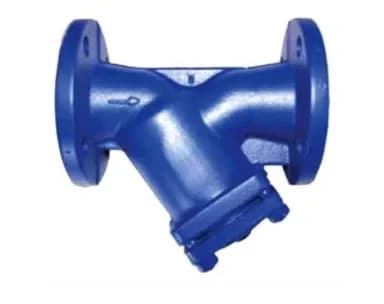
Hurain Engitech & Trade, based in Palanpur, Gujarat, manufactures, wholesales and exports strainers to buyers in Ethiopia, including Addis Ababa, Mekelle, Debre Birhan. We quote FOB, CFR or CIF Djibouti with about 12–22 days sea transit and full export documents.
Why Ethiopia needs strainers
Ethiopia is Africa's second most populous country, with a large farming economy and state-built industrial parks for textiles and agro-processing. It is landlocked and imports mainly through Djibouti by rail and road.
Filters for engines, generators, compressors and hydraulics are replaced at every service interval.
Manufacturing & plant maintenance in Ethiopia
Industrial parks and factories need MRO supplies and tools.
In Ethiopia, factories & oems and mro distributors buy strainers from us mainly for engines and generators and compressors.
Who buys strainers: Factories & OEMs · MRO distributors · Maintenance contractors · Machine shops
Power & utilities in Ethiopia
Power stations and utilities in Ethiopia need valves, gauges, cables, switchgear and — for solid-fuel plants — coal-handling conveyors and spares.
In Ethiopia, power plants and utilities buy strainers from us mainly for hydraulic power packs and water treatment.
Who buys strainers: Power plants · Utilities · Transmission contractors
Automotive & workshops in Ethiopia
Auto-parts traders in Ethiopia turn stock quickly, so they value mixed loads of tyres, lubricants, jacks and accessories rather than single-product containers.
In Ethiopia, auto-parts dealers and tyre shops buy strainers from us mainly for chemical and food processing and engines and generators.
Who buys strainers: Auto-parts dealers · Tyre shops · Fleet operators · Service workshops
Mining & minerals in Ethiopia
Mines and processing plants in Ethiopia move ore on belt conveyors and bucket elevators around the clock. Spherical roller bearings, gear couplings, conveyor belts and idlers wear continuously, so reliable spares supply directly protects production.
In Ethiopia, open-pit and underground mines and mineral processing plants buy strainers from us mainly for compressors and hydraulic power packs.
Who buys strainers: Open-pit and underground mines · Mineral processing plants · Quarries · Bulk ports
Typical uses: Engines and generators · Compressors · Hydraulic power packs · Water treatment · Chemical and food processing.
Top 7 cities for strainers in Ethiopia
Ranked by how closely each city's industries match the buyers of strainers. Every city links to its own page with local delivery details.
- 01Strainers in Addis Ababavia Djibouti · 2–3 days by rail or roadThe capital and main market, with industrial parks, pharmaceutical plants and heavy construction.Manufacturing & plant maintenance
- 02Strainers in Mekellevia Djibouti · 2–3 days by roadNorthern cement, textile and mining centre.Mining & minerals
- 03Strainers in Debre Birhanvia Djibouti · 2–3 days by roadFast-growing industrial town with breweries and factories.Manufacturing & plant maintenance
- 04Strainers in Adamavia Djibouti · 2 days by rail or roadIndustrial and agro-processing town with an industrial park on the main corridor.Manufacturing & plant maintenance
- 05Strainers in Kombolchavia Djibouti · 2 days by roadIndustrial park and textile mills on the Djibouti road.Manufacturing & plant maintenance
- 06Strainers in Bishoftuvia Djibouti · 2–3 days by roadPoultry and agro-industry town near Addis Ababa.Manufacturing & plant maintenance
- 07Strainers in Dire Dawavia Djibouti · 1–2 days by rail or roadRail town on the Djibouti corridor with an industrial park and cement production.Manufacturing & plant maintenance
Importing strainers into Ethiopia: local guide
Practical facts for buyers in Ethiopia — working days, time difference, customs system, trade-agreement duty and the seasons to plan around.
| Weekend | Saturday–Sunday (many trading firms also work Saturday mornings) |
|---|---|
| Our office hours in your time | 07:00–16:30 Ethiopia time (09:30–19:00 IST), Monday to Saturday |
| Country calling code | +251 (our WhatsApp: +91 87809 43729) |
| Business languages | Amharic; we correspond in English |
| Currency | bir (ETB); quotations in USD |
| Customs system | Ethiopian electronic single window (eSW) |
| Trade agreement with India | No India-specific trade agreement; standard (MFN) duty applies |
| Plan orders around | Ramadan and the Eid holidays, plus the Christmas–New Year period |
Strainers specifications for Ethiopia
Typical specification range for industrial filters & strainers; exact values are confirmed per order and matched to Ethiopia's import requirements.
| Filter types | Cartridge, bag, basket, spin-on, element |
|---|---|
| Media | Cellulose, glass fibre, polypropylene, SS mesh |
| Micron rating | 1 to 500 micron |
Standards: ISO 16889, ISO 2941, ISO 4548 or the standard your project specifies. Imports require a bank permit and foreign-exchange allocation; regulated products may need conformity assessment by Ethiopian authorities.
Price, duties & landed cost in Ethiopia
| Quotation currency | USD (EUR on request); you pay in bir (ETB) through your bank |
|---|---|
| Incoterms | EXW, FOB Mundra or Kandla (Gujarat), CFR or CIF Djibouti |
| Import taxes | Import duty plus VAT (EAC / COMESA frameworks where applicable) |
| Import conformity | Imports require a bank permit and foreign-exchange allocation; regulated products may need conformity assessment by Ethiopian authorities. |
| Export documents | Commercial invoice, packing list, certificate of origin, bill of lading; test certificates / COA where applicable |
| Payment | 50% advance with order confirmation and 50% before dispatch against export documents; L/C at sight can be discussed for larger orders. |
Packing for shipment to Ethiopia
Items are rust-protected where needed (VCI paper, oil or grease), packed in cartons, boxes or wooden cases, and palletised on fumigated (ISPM-15) pallets. Carton marks, barcodes and private-label packing are available.